1 Roosevelt Avenue, Suite 203 Peabody, MA 01960




Bone Grafting for Implants: Your Dental Specialist’s Guide
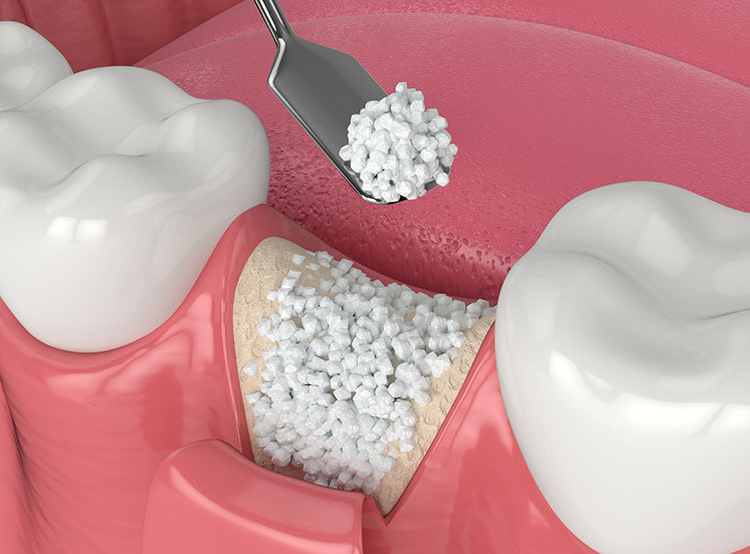
Losing a tooth feels like the end of the problem. You had it pulled, the pain stopped, and you moved on. But here’s what most people don’t realize: the moment that tooth comes out, your jawbone starts to change without any warning signs until the damage is already significant.
That’s where bone grafting comes in. It’s one of the most reliable procedures in modern dentistry, and for patients dealing with bone loss, it can be the difference between having solid options for tooth replacement and having very few. At Coastal Dental Arts in Peabody, MA, bone grafting is done right in the office with no added complexity.
If you’ve been told you might need one, or if you’re simply curious about the process, here’s what you need to know.
Why Jawbone Loss Happens and Why It Moves Fast
Your jawbone stays strong because your teeth keep it stimulated. Every time you chew, bite, or talk, the roots of your teeth send signals through the bone that tell your body to keep maintaining it. Remove that stimulation, and the body starts to reabsorb the bone because it no longer sees a reason to maintain it.
The rate of bone loss is fastest in the first six months after extraction. During this period, the bone can lose 32% of its width within three months and up to 63% by six months, with the height reducing by 11–22% in the first half year. That’s a significant amount of structural change happening in a short window, and most patients can’t feel it.
A dentist at Coastal Dental Arts can spot early bone loss on X-rays before it becomes a bigger issue. After six months, the rate of loss slows but does not stop, and the outer ridge of the alveolar bone collapses inward more than the deep jawbone, affecting gum shape, nearby teeth, and where an implant can ultimately sit.
Beyond tooth extractions, gum disease is the other major driver. Periodontal disease erodes the bone that supports your teeth over time, sometimes causing enough damage that teeth become loose even before they’re extracted. When that happens, bone grafting becomes necessary just to restore the foundation.
What Bone Grafting Does
A bone graft replaces missing or lost bone in the jaw. The goal is to restore enough volume and density that your jaw can support a dental implant, hold a denture more securely, or simply remain structurally healthy without further deterioration.
At Coastal Dental Arts, the bone grafting starts with a thorough exam and dental x-rays. These images help the team see exactly where bone loss has occurred and how much material will be needed to address it. From there, the right type of graft material is selected based on your case, and that choice matters more than most people expect.
Types of Bone Graft Material
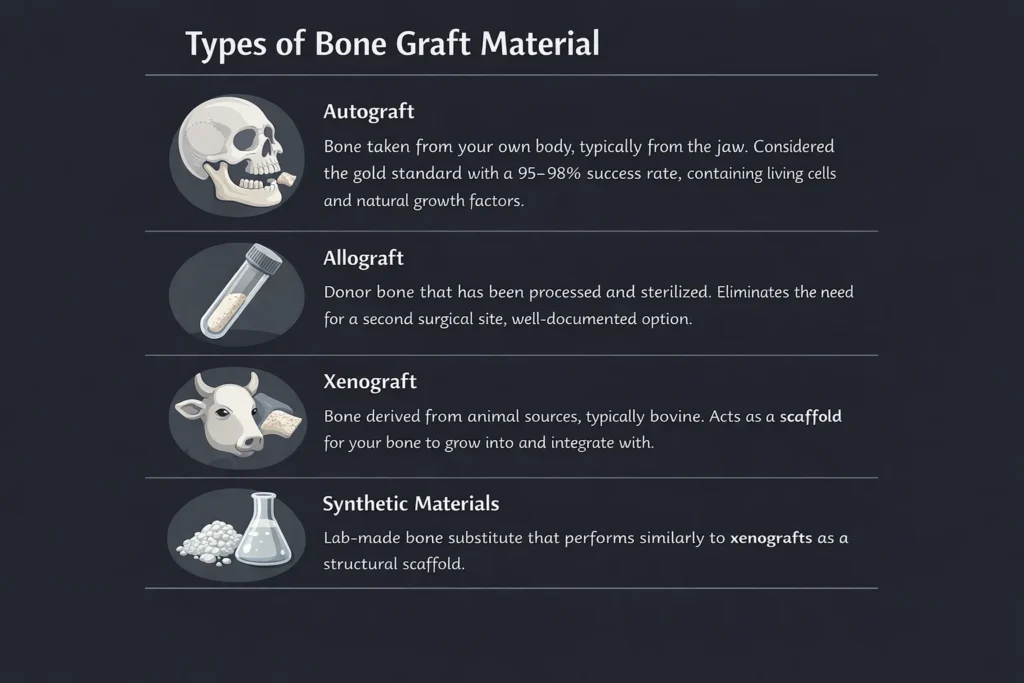
There are a few different graft sources used in dentistry, and each has its role:
- Autograft – bone taken from your own body, typically from the jaw. This is considered the gold standard because it contains your own living cells and natural growth factors, which results in the highest compatibility. Autografts boast a 95–98% success rate and can help implants last over 20 years.
- Allograft – donor bone that has been processed and sterilized. This eliminates the need for a second surgical site and is a common, well-documented option.
- Xenograft – bone derived from animal sources, typically bovine. It acts as a scaffold for your own bone to grow into and integrate with.
- Synthetic materials – lab-made bone substitute that performs similarly to xenografts as a structural scaffold.
What to Expect During the Procedure
One of the most common concerns patients have is that bone grafting sounds more complicated than it is. In practice, it’s a straightforward in-office procedure.
After confirming the plan and administering sedation, the dentist makes a small incision in the gum tissue to access the area needing augmentation. The graft material is placed into the site, and a bone growth factor is applied to help the new material integrate with your existing bone. The gum tissue is then closed, and healing begins.
Initial recovery typically takes about a week, but the bone graft itself needs at least three months to heal, and full integration can take up to a year, depending on the size of the graft and the patient’s overall health. During this time, your jaw is quietly rebuilding. Once the graft has fused successfully, implant placement or denture fabrication can move forward on a stable foundation.
Who Is a Good Candidate?
Most patients who have experienced tooth loss or gum disease are at least worth evaluating for bone grafting. You’re likely a good candidate if you:
- Have had one or more teeth extracted and are planning to replace them with implants
- Have been told your bone is too thin or too shallow to support an implant right now
- Wear a denture that no longer fits well due to changes in the jawbone
- Have lost bone as a result of periodontal disease
Candidacy is determined by a combination of a clinical exam and X-ray evaluation at Coastal Dental Arts. The imaging tells a clear story about where you stand and what your options are.
It’s also worth noting that waiting makes things more complicated. Over 2.2 million bone graft procedures are performed at the time of tooth extraction worldwide each year, and this additional bone has enabled implant placement procedures to achieve a global success rate greater than 96%. Acting sooner at the time of extraction keeps your options open and simplifies the overall treatment path.
Bone Grafting and Your Face: The Bigger Picture
There’s a cosmetic dimension to bone loss that often surprises patients. When the jawbone shrinks, the face above it changes too. The cheeks can look slightly sunken, the lower face shortens, and fine lines around the mouth can deepen. Many patients describe looking older than they feel, and bone loss beneath the surface is frequently the reason.
Bone grafting preserves your facial structure. That’s a benefit worth taking seriously, especially for patients in their 40s and 50s who are noticing these changes and aren’t sure why.
The team at Coastal Dental Arts in Peabody, MA, is here to give you a simple, no-pressure evaluation. Call (978) 432-5666 or schedule an appointment online because the sooner you know, the more options you have.
People Also Ask About Bone Grafting
Can I get a bone graft years after a tooth was extracted?
Yes – bone grafting is still possible even if significant time has passed since your extraction. The procedure may be more involved depending on how much bone has been lost, but it’s rarely too late. A dental evaluation with x-rays will determine what’s needed.
Does a bone graft hurt?
Most patients report very little discomfort during the procedure itself, as sedation is used. Some soreness and swelling in the days following is normal and manageable with over-the-counter pain relievers or a prescription if needed. Most people return to normal activities within a few days.
Will my body reject the graft material?
Rejection is rare with modern graft materials. Allografts and xenografts are extensively processed to ensure they’re safe and biocompatible. Your own biology takes over the integration process, gradually replacing the graft material with your natural bone.
How long do I have to wait after a bone graft before getting an implant?
Typically, three to six months, though this varies depending on the size of the graft and how well integration is progressing. Your dentist will confirm readiness with x-rays before scheduling implant placement.
Can gum disease cause enough bone loss to require a graft even if I haven’t had a tooth pulled?
Yes. Advanced periodontal disease can destroy the bone supporting your teeth without any extractions occurring. In these cases, bone grafting may be recommended to stabilize the area and prevent further tooth loss, not just to prepare for implants.
Related Articles
Want to schedule an appointment?
Ready to book your next appointment? Let's find the perfect time for you!