1 Roosevelt Avenue, Suite 203 Peabody, MA 01960




Child Dental Emergency: What to Do If a Tooth Gets Knocked Out
Children are active, curious, and always on the move. Whether they are running on playgrounds, riding bikes, or playing sports, small accidents can happen at any moment. One of the most alarming situations for parents is when a child’s tooth gets knocked out during play or a fall. Dental trauma like this can feel overwhelming, especially if you are unsure what to do next.
A knocked-out tooth is one of the most common dental emergencies in children. The good news is that quick and calm action can sometimes save the tooth and prevent long-term problems. Understanding the right steps immediately after the injury can make a major difference in the outcome.
This guide explains what parents should do, what mistakes to avoid, and when to seek professional care. Acting quickly and contacting a pediatric dentist when necessary can help protect your child’s oral health and restore their smile.
Why Knocked-Out Teeth Are Common in Children
Children live active lives filled with physical activity, which is great for their development, but also increases the risk of accidents. As kids explore the world around them, falls and bumps are almost inevitable. These moments can sometimes lead to dental injuries, including teeth that become loose or completely knocked out.
One of the most common reasons for dental trauma is active play. Children often run, jump, and climb without fully recognizing potential risks. Sports activities such as soccer, basketball, or skateboarding can also lead to sudden collisions or falls that affect the mouth and teeth. Even simple playground activities can cause injuries if a child trips or slips while playing with friends.
School playgrounds are another common setting for dental injuries. When many children are running and playing together, accidental bumps or falls can happen quickly. Bike or scooter accidents can also cause facial impact, especially if protective gear is not used.
Young children are also still developing coordination and balance. Because their motor skills are improving but not yet fully refined, they may fall more often than adults. When a fall happens face-first, teeth can absorb the impact.
While these situations are common, they should never be ignored. Prompt dental care is critical after a tooth injury. Acting quickly increases the chances of preserving the tooth and preventing complications that may affect your child’s smile in the future.
Baby Tooth vs Permanent Tooth: Why It Matters
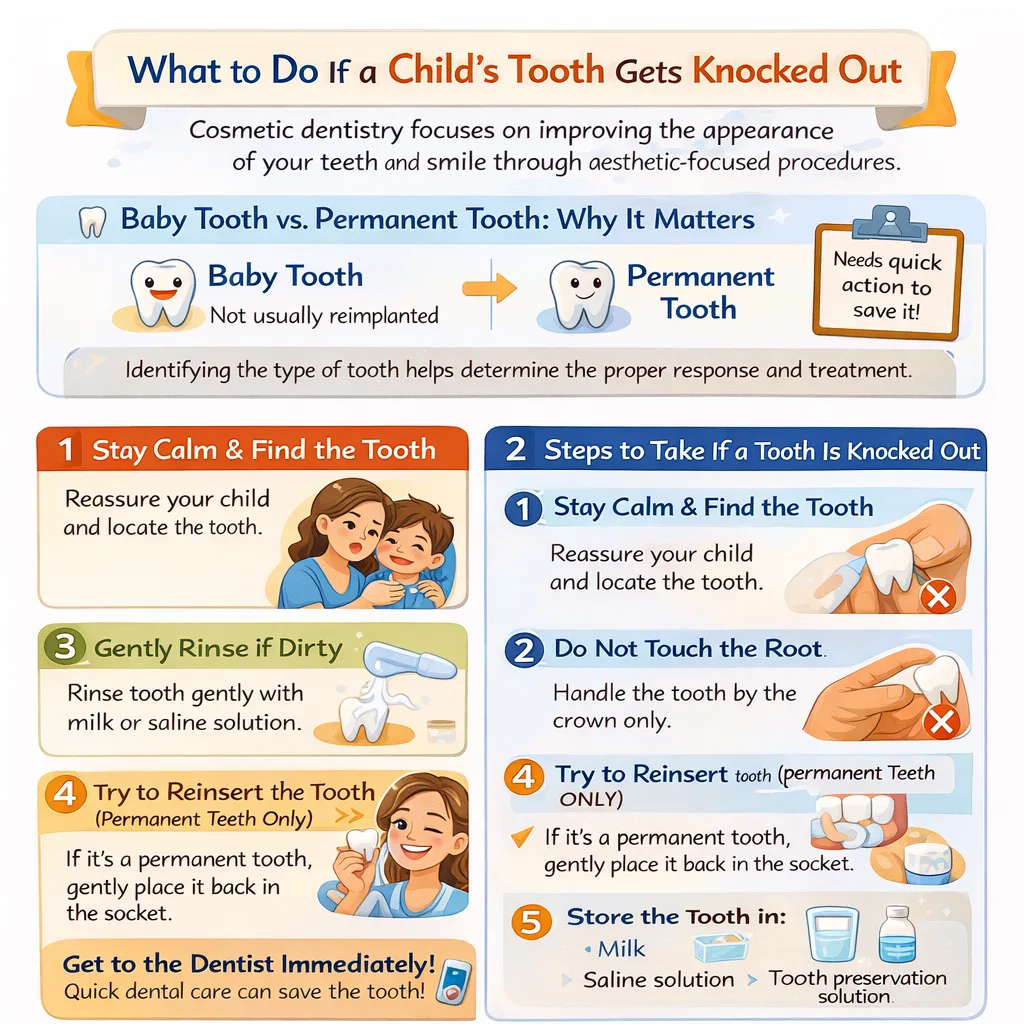
When a child’s tooth gets knocked out, parents often panic and rush to find a solution. However, the first step is identifying whether the tooth is a baby tooth or a permanent one. The approach to treatment depends greatly on this distinction.
Baby teeth usually begin to appear around six months of age and remain until the early teenage years. These teeth play an important role in helping children chew food, speak clearly, and guide permanent teeth into the correct position. However, when a baby tooth is knocked out completely, it is typically not reimplanted. Placing it back into the socket can sometimes damage the developing permanent tooth underneath.
Permanent teeth, on the other hand, may be saved if treatment occurs quickly. These teeth usually begin appearing around age six. If a permanent tooth is knocked out, immediate action is crucial. In some cases, the tooth can be placed back into its socket and stabilized by a dental professional.
Parents should also understand that children between six and twelve years old may have a mix of baby and permanent teeth. Identifying which type of tooth was lost helps determine the proper response and treatment.
If there is any uncertainty, contacting a pediatric dentist in Peabody for guidance is always the safest choice. Early professional evaluation helps ensure that the right steps are taken to protect your child’s oral health.
What Parents Should Do Immediately If a Tooth Is Knocked Out
When a tooth is knocked out, the first few minutes are extremely important. Staying calm and acting quickly can increase the chances of saving the tooth, especially if it is a permanent one. Knowing the proper steps helps parents respond confidently during a stressful moment.
Step 1: Stay Calm and Find the Tooth
The first step is to remain calm and locate the tooth. Children often feel frightened or confused after a fall, so reassuring them is important. Carefully pick up the tooth, but hold it only by the crown, which is the visible part that normally sits above the gums.
Step 2: Do Not Touch the Root
The root of the tooth contains delicate cells that help the tooth reattach inside the socket. Touching or damaging these cells can reduce the chance of saving the tooth. Always avoid holding the tooth by its root.
Step 3: Gently Rinse If Dirty
If the tooth has dirt or debris on it, gently rinse it with milk or saline solution. This helps remove particles without damaging the root surface. Avoid scrubbing, brushing, or using soap, as this can harm the living cells needed for reattachment.
Step 4: Try to Place the Tooth Back (Permanent Teeth Only)
If the tooth is permanent and you feel comfortable doing so, gently try to place it back into the socket. Make sure it is positioned correctly, then have the child bite down on a clean piece of gauze or cloth to help hold it in place.
Step 5: Store the Tooth Properly If Reinsertion Isn’t Possible
If reinserting the tooth is not possible, it must be stored in a suitable environment to keep the root cells alive. The best options include:
- Milk
- A tooth preservation solution
- Inside the child’s cheek (for older children who can safely hold it)
- Saline solution
These liquids help maintain moisture and protect the cells on the root surface.
Step 6: Visit a Dentist Immediately
Time plays a crucial role in saving a knocked-out tooth. Ideally, the tooth should be treated within 30 to 60 minutes of the injury. The sooner a dental professional evaluates the tooth, the higher the chances of successful reattachment.
Families living near the coast often enjoy outdoor activities such as beach outings, biking paths, and community parks. While these activities are part of everyday life, they can occasionally lead to unexpected injuries. Seeking prompt care from a pediatric dentist in Peabody ensures that children receive the immediate treatment needed after a dental accident.
What NOT to Do When a Tooth Gets Knocked Out
When dealing with a dental emergency, parents sometimes make mistakes simply because they are trying to help quickly. Avoiding certain actions can protect the tooth and improve the chances of successful treatment.
One common mistake is scrubbing the tooth. While it may seem helpful to clean the tooth thoroughly, scrubbing can damage the delicate root cells that allow the tooth to reattach.
Another mistake is wrapping the tooth in a tissue or cloth. Dry storage can cause the root cells to die quickly, making reimplantation much more difficult.
Some people also place the tooth in water, but this is not recommended. Water can damage the cells on the root surface because it does not maintain the proper balance needed for survival.
Finally, delaying dental care can reduce the chances of saving the tooth. Even if the injury appears minor, it is important to seek professional evaluation as soon as possible. Quick and careful handling greatly improves treatment outcomes.
Signs Your Child Needs Immediate Emergency Dental Care
Certain symptoms after a dental injury require urgent attention. Parents should watch closely for warning signs that indicate the need for immediate care.
Persistent bleeding is one of the most serious signs. If bleeding does not stop after applying gentle pressure, professional treatment is necessary.
Severe pain may also indicate more serious damage to the tooth, nerves, or surrounding structures. Children who complain of strong pain after an injury should be evaluated quickly.
Jaw injuries can occur during falls or collisions. If the child has difficulty opening or closing their mouth, there may be underlying damage that needs immediate attention.
Tooth fragments in the mouth or around the injury site can signal a fracture or break. Swelling of the gums or face may indicate trauma or infection.
Children who struggle to bite down properly or close their mouths normally should also be seen by a dental professional as soon as possible. Early evaluation helps prevent complications and supports faster recovery.
How Dental Specialists Treat a Knocked-Out Tooth
When a child arrives for treatment after a tooth injury, the dental team will first evaluate the condition of the tooth and surrounding tissues. The goal is to determine whether the tooth can be saved and how best to stabilize it.
If the tooth is suitable for reimplantation, it may be placed back into the socket and secured. A small dental splint may be used to hold the tooth in position while the surrounding tissues heal.
X-rays are typically taken to assess damage to the root, jawbone, and nearby teeth. These images help guide treatment and ensure that no hidden injuries are overlooked.
In some cases, a root canal procedure may be necessary to protect the tooth from infection after it has been reattached. Follow-up visits are important to monitor healing and confirm that the tooth remains stable.
How to Prevent Dental Injuries in Children
While accidents cannot always be avoided, many dental injuries can be prevented with simple precautions.
Children who participate in sports should wear properly fitted mouthguards. These protective devices absorb impact and help reduce the risk of tooth injuries.
Helmets are also essential when riding bikes, skateboards, or scooters. They protect not only the head but also help reduce facial injuries.
Parents can encourage safe playground habits, such as avoiding pushing or rough play. Teaching children to be aware of their surroundings helps reduce the risk of falls.
Regular dental visits also play a role in prevention. Routine exams allow dental professionals to monitor oral development and provide guidance on protective habits.
Children should also avoid chewing on hard objects like ice, pens, or hard candies, which can weaken teeth over time.
When a Knocked-Out Tooth Cannot Be Saved
Despite the best efforts, some teeth cannot be saved after severe trauma. In these situations, dental professionals focus on restoring function and appearance while supporting normal oral development.
For younger children, space maintainers may be used to hold the gap left by a missing tooth. These devices help guide permanent teeth into their proper position.
Dental bonding can sometimes restore damaged areas of nearby teeth, improving appearance and function. Pediatric dental prosthetics may also be used to replace missing teeth temporarily.
As children grow older and their jaws finish developing, long-term solutions such as dental implants may become an option. These treatments help restore a complete and healthy smile.
When Should Parents Call an Emergency Dental Care Specialist?
Parents should contact a dental professional immediately when certain situations occur. A tooth that has been completely knocked out requires urgent attention to maximize the chance of saving it.
Teeth that are partially dislodged or pushed out of position should also be evaluated quickly. Severe pain after an injury may indicate more serious damage that needs treatment.
Broken or fractured teeth require prompt care to prevent infection and further damage. Swelling around the gums, jaw, or face can also signal a serious problem.
Any signs of infection, difficulty chewing, or changes in the way the teeth come together should be examined right away. Early intervention helps protect your child’s oral health and prevents long-term complications.
Dental emergencies involving children can be frightening, but knowing what to do makes a major difference. Acting quickly, handling the tooth carefully, and seeking professional care can improve the chances of saving the tooth and protecting your child’s smile.
Parents who understand the proper steps are better prepared to respond calmly when accidents happen. Quick action within the first hour after a tooth injury can significantly improve treatment outcomes.
If your child experiences a dental injury, contacting a dental professional immediately is the safest step. The team at Coastal Dental Arts is committed to helping families respond to dental emergencies with confidence and care. If your child’s tooth gets knocked out or injured, schedule an appointment right away to ensure your child receives the prompt attention they need.
Child Dental Emergency Questions People Also Ask
Is it safe to put the tooth back in the socket at home?
If the tooth is permanent and positioned correctly, gently placing it back in the socket may help preserve it until dental care is available. If unsure, store it properly and seek immediate professional help.
Will a child feel pain after a tooth is knocked out?
Pain and swelling are common after dental trauma. A dentist will evaluate the injury and provide appropriate treatment to reduce discomfort and protect the surrounding teeth and tissues.
How long can a tooth stay out of the mouth and still be saved?
A permanent tooth has the best chance of survival if it is treated within 30–60 minutes. The sooner dental care is received, the higher the chances of successful reimplantation.
What happens if the tooth cannot be reattached?
If the tooth cannot be saved, dentists can recommend solutions such as space maintainers, prosthetic replacements, or long-term restorative options once the child is older.
Want to schedule an appointment?
Ready to book your next appointment? Let's find the perfect time for you!
